Do you need electrolyte drinks?
Who actually sweats enough to need electrolytes, what happened to Boston Marathon runners who drank too much, and what to check on a packet.

Katja Michel, M.Ed. · 5 min read
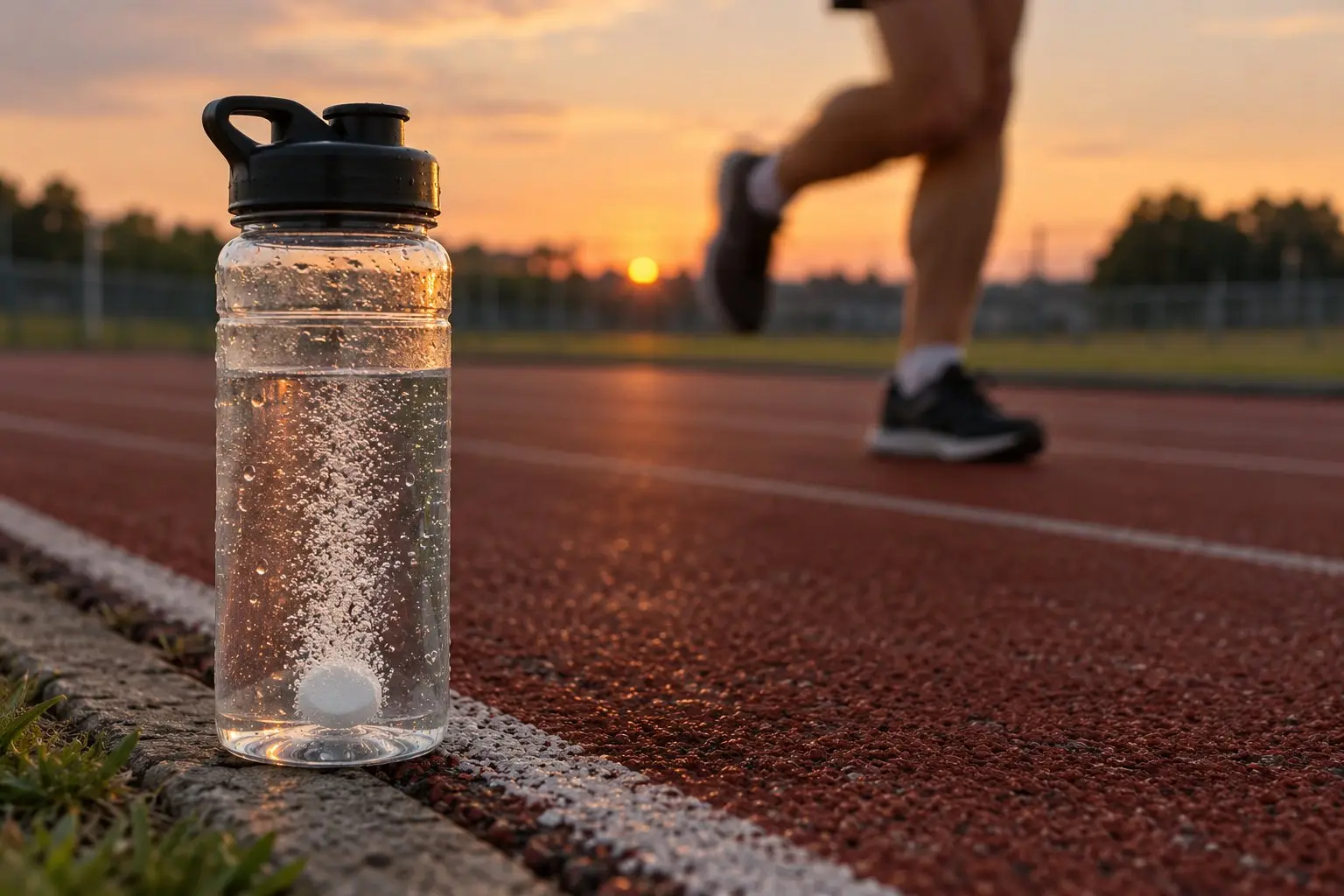
Most people don’t need electrolyte drinks; for everyday life, office work and a normal workout, water and ordinary meals replace what you lose. Electrolytes become useful during long or intense exercise in the heat, when you sweat heavily for hours, and when you need to rehydrate quickly. The bigger risk for endurance athletes is drinking too much plain water, which can dilute the sodium in the blood.
Key takeaways
- Both the amount of sweat and its electrolyte content differ a lot from one person to the next.
- The American College of Sports Medicine recommends drinking enough during exercise to avoid a meaningful water deficit, with individual plans because sweat varies.
- Drinks with electrolytes and carbohydrates can be better than water alone during prolonged exercise, according to the same guidance.
- In a Boston Marathon study, a sizable share of runners tested had low blood sodium at the finish, mostly those who gained weight by drinking too much.
- Oral rehydration solutions and milk kept more fluid in the body than water in a head-to-head test of beverages.
When do you actually need electrolytes?
When you sweat a lot for a long time, especially in the heat. According to the American College of Sports Medicine, the goal of drinking during exercise is to prevent a water deficit of more than 2 percent of body weight and large shifts in electrolyte balance. Because sweating rates and the electrolyte content of sweat vary considerably between people, it recommends individual plans, and it says that drinks with electrolytes and carbohydrates can be better than water alone under certain circumstances (American College of Sports Medicine et al., 2007).
A simple test from the same position stand: weigh yourself before and after a typical workout. The difference, plus whatever you drank, tells you roughly how much you sweat. If you lose little weight in a normal session, your water bottle and your next meal are enough.
Can you drink too much water during exercise?
Yes, and it can be dangerous. Researchers tested the blood of 488 runners at the finish of the 2002 Boston Marathon. Thirteen percent had hyponatremia, a low level of sodium in the blood, and 0.6 percent had a critical level. The strongest risk factors were weight gain during the race, which means drinking more than was lost, a race time of more than four hours and very low or high body weight. Whether runners drank sports drinks or plain water made no difference (Almond et al., 2005).
That last finding is the useful one: the type of drink didn’t protect anyone who drank much more than they sweated out. Not gaining weight during a long event is the safeguard the study points to.
Do electrolyte drinks hydrate better than water?
For keeping fluid in the body, some do. When 72 men drank a liter of one of 13 different drinks, an oral rehydration solution, full-fat milk and skimmed milk led to less urine over the next four hours than still water did, so more of the fluid stayed in the body. A sports drink performed no differently from water (Maughan et al., 2016).
So an oral rehydration solution holds on to water better, while the sports drink in this test did no better than water. How coffee and tea compare in the same test is in Does coffee dehydrate you?
Is the sodium in electrolyte powders a problem?
It can be, if you drink them out of habit. Americans already eat about 3,400 milligrams of sodium a day on average, well above the 2,300 milligrams the Dietary Guidelines set as the limit (U.S. Food and Drug Administration, 2024), so check the sodium on an electrolyte packet and count it toward your day. Where the rest of that salt comes from is explained in How much salt a day is too much? If you have high blood pressure, heart or kidney disease, ask your doctor before using electrolyte products regularly.
What I’d do
- Drink water for daily life and normal workouts.
- Use an electrolyte drink during long exercise in the heat or whenever you sweat heavily for hours.
- Weigh yourself before and after a long training session to learn how much you sweat.
- Avoid drinking so much during marathons and long hikes that you gain weight.
- Ask a doctor quickly if a child or an older person can’t keep fluids down.
Frequently asked questions
Do electrolyte drinks help with a hangover? I found no trial that tested electrolyte drinks against water for hangovers. Alcohol’s effects go well beyond fluid loss, as Is any amount of alcohol safe? explains.
What are the signs of low blood sodium? The Boston study measured sodium in the blood rather than symptoms, so it can’t tell you how low sodium feels (Almond et al., 2005). If you feel very unwell after a long event where you drank a lot, get medical help and say how much you drank.
Is coconut water a good electrolyte drink? Coconut water wasn’t among the drinks in the hydration test, and I found no trial showing that it beats water or an oral rehydration solution.
Sources
- Almond, C. S., Shin, A. Y., Fortescue, E. B., Mannix, R. C., Wypij, D., Binstadt, B. A., et al. (2005). Hyponatremia among runners in the Boston Marathon. The New England Journal of Medicine, 352(15), 1550–1556. https://doi.org/10.1056/nejmoa043901
- American College of Sports Medicine, Sawka, M. N., Burke, L. M., Eichner, E. R., Maughan, R. J., Montain, S. J., & Stachenfeld, N. S. (2007). American College of Sports Medicine position stand: Exercise and fluid replacement. Medicine & Science in Sports & Exercise, 39(2), 377–390. https://doi.org/10.1249/mss.0b013e31802ca597
- Maughan, R. J., Watson, P., Cordery, P. A., Walsh, N. P., Oliver, S. J., Dolci, A., et al. (2016). A randomized trial to assess the potential of different beverages to affect hydration status: Development of a beverage hydration index. The American Journal of Clinical Nutrition, 103(3), 717–723. https://doi.org/10.3945/ajcn.115.114769
- U.S. Food and Drug Administration. (2024, March 5). Sodium in your diet. https://www.fda.gov/food/nutrition-education-resources-materials/sodium-your-diet