Is decaf worth switching to?
How much caffeine decaf still holds, what two large UK studies found on decaf and a long life, and which decaf method avoids the solvent question.

Katja Michel, M.Ed. · 8 min read
How much caffeine is in your own day? Take the one-minute test
If caffeine costs you sleep, makes your heart race or your nerves hum, or you’re pregnant, decaf is one of the easiest good trades in nutrition: you keep the ritual and, according to large population studies, much of the link between coffee and a longer life. If you sleep well and feel fine on regular coffee, there’s no strong health reason to switch. Decaf still contains a little caffeine, and the way the beans were decaffeinated isn’t always printed on the bag.
Key takeaways
- Decaf is not caffeine-free, so people who must avoid caffeine strictly should count it.
- In large UK studies, decaf drinkers had a lower risk of early death, much like regular coffee drinkers.
- Caffeine costs most people some sleep, and decaf removes nearly all of that cost.
- Water-processed or CO₂-processed decaf avoids the solvent question.
- Switching over a week or two is gentler than stopping at once.
How does decaf compare with regular coffee?
Decaf has far less caffeine and, in large studies, a similar link with a longer life. The one difference found so far concerns heart rhythm.
Regular coffee and decaf compared
| Regular brewed coffee (8 oz) | Decaf (8 oz) | |
|---|---|---|
| Caffeine | about 95 mg | about 2 to 15 mg |
| Link with lower all-cause mortality in large cohorts | yes | yes |
| Link with fewer heart rhythm problems (UK Biobank) | yes (ground and instant) | no |
| Effect on sleep | shorter sleep, especially later in the day | minimal for most people |
Caffeine values come from the U.S. Department of Agriculture (n.d.) and the Food and Drug Administration (FDA, n.d.).
Who invented decaf coffee?
The German coffee merchant Ludwig Roselius and two colleagues in Bremen. In 1906 they filed a US patent, on behalf of their company Kaffee HAG, for a process that softened the green beans with steam and then washed out the caffeine with a solvent, preferably benzene (Meyer et al., 1908). The popular story is that Roselius blamed coffee for his father’s death and found the effect in a shipment of beans soaked by seawater, but I couldn’t find a reliable source for either detail.
Benzene is classified as carcinogenic to humans (IARC, n.d.), and it has long since been abandoned as a decaf solvent. The question of what we use to wash caffeine out of coffee, though, is still open, and we’ll come back to it.
How much caffeine is left in decaf?
An 8-ounce cup of decaf typically contains 2 to 15 mg of caffeine, according to the U.S. Food and Drug Administration (FDA, n.d.). Real coffee-shop samples fall in that range too: a 2006 study measured 0 to 13.9 mg in 16-ounce decaf coffees from ten outlets, and 3.0 to 15.8 mg in single shots of decaf espresso from one coffee shop (McCusker et al., 2006).
For most people that’s a rounding error. For people who need to avoid caffeine strictly, because of certain medications or a doctor’s instruction, five cups of decaf can add up to roughly the caffeine in one weak regular coffee. The same study noted exactly this risk for patients told to avoid caffeine (McCusker et al., 2006).
Does decaf keep coffee’s health benefits?
Largely yes, according to very large cohorts.
In the UK Biobank, which followed nearly 500,000 adults for about ten years, coffee drinkers had a lower risk of death than non-drinkers, and the authors found similar associations for instant and ground coffee and for decaffeinated coffee. They concluded that this points to compounds other than caffeine (Loftfield et al., 2018).
A second analysis of the same cohort, covering about 450,000 people over 12.5 years, looked at coffee types separately. Two to three cups of decaf a day were associated with a 14 percent lower risk of death from any cause, compared with no coffee, and decaf was also associated with less cardiovascular disease. One difference stood out: ground and instant coffee were linked to fewer heart rhythm disorders, while decaf was not (Chieng et al., 2022).
Both studies are observational. People who drink coffee differ from people who don’t in ways no statistical model fully captures, and the decaf drinkers may include people who switched because of a health problem. Still, the pattern fits the authors’ own reading that caffeine is not the only active part of the cup. So decaf seems to keep much of coffee’s link with a longer life, while caffeine may matter for the heart-rhythm finding. For the heart in more detail, see Is coffee good for your heart?
What happens when you cut the caffeine?
Your sleep improves, according to the most direct evidence on what caffeine does day to day. It comes from a 2023 trial in The New England Journal of Medicine. A hundred adults wore heart monitors, step trackers and glucose sensors for two weeks, and a daily text message told them at random whether to drink caffeinated coffee or avoid caffeine (Marcus et al., 2023).
On coffee days, they walked about 1,000 more steps and slept about 36 minutes less per night. Extra beats from the heart’s upper chambers didn’t increase significantly, while extra beats from the lower chambers rose from 102 to 154 a day on average. Blood sugar didn’t change (Marcus et al., 2023).
Timing matters too. In a 2013 sleep study, 400 mg of caffeine disrupted sleep even when taken six hours before bed (Drake et al., 2013). The FDA lists the effects of too much caffeine plainly: a faster heart rate, palpitations, higher blood pressure, sleep problems, anxiety, jitters, an upset stomach, nausea and headaches (FDA, n.d.). The coffee cutoff article shows how to find your own last-cup time, and the one on caffeine and anxiety covers the jitters.
Who should switch to decaf?
People who sleep badly or like a cup in the afternoon or evening gain the most.
- People who feel anxious or shaky or notice palpitations after coffee
- Pregnant people, because the American College of Obstetricians and Gynecologists considers less than 200 mg of caffeine a day moderate, and decaf lets you keep more cups within that limit (ACOG, 2010)
- People on medications that interact with caffeine, after checking with their doctor or pharmacist
- Anyone who drinks coffee mainly for the ritual, the warmth and the taste
How is decaf made, and does it matter?
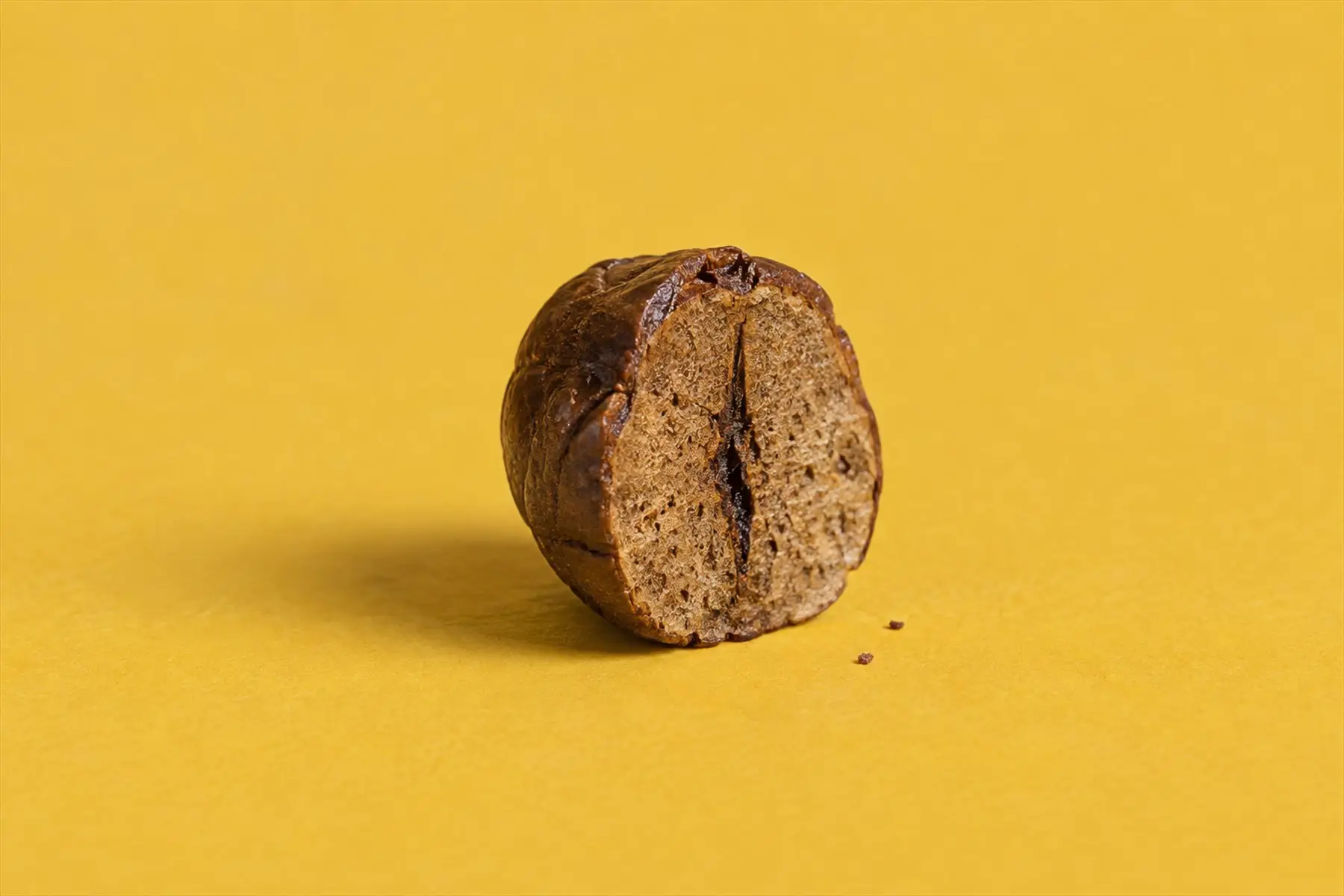
Caffeine is removed from the green beans before roasting, in one of three ways: with water (the Swiss Water Process, for example, draws out the caffeine without chemical solvents), with carbon dioxide under high pressure, or with solvents, mainly ethyl acetate or methylene chloride. The National Coffee Association says most decaf is produced with the “European method,” which uses methylene chloride.
Methylene chloride is classified as probably carcinogenic to humans by the International Agency for Research on Cancer (IARC, 2017). In 2024 the U.S. Environmental Protection Agency banned it from consumer use and most industrial and commercial uses, but food is regulated separately (Center for Science in the Public Interest, 2024). The FDA allows residues of up to 10 parts per million in decaf coffee (Code of Federal Regulations, n.d.), and the EU allows up to 2 mg per kilogram of roasted coffee (European Parliament & Council, 2009). In December 2023 consumer groups petitioned the FDA to withdraw the authorization. As of June 2026 the FDA had reopened public comments and not yet announced a decision (Daily Coffee News, 2026).
I found no study measuring whether residues at these levels affect the health of decaf drinkers. That makes this a plausible concern with an unknown size, and an easy one to avoid if you’d rather not take it on. If it matters to you, buy decaf labeled as water-processed, Swiss Water or CO₂, or ask your roaster which method they use.
How do you switch to decaf without a headache?
Cut back gradually. Caffeine withdrawal isn’t dangerous, but it can be unpleasant, and the FDA recommends cutting back slowly if you’re used to daily coffee (FDA, n.d.). Many people go through a week or two of half-caf, made by mixing regular and decaf beans, before switching completely.
What I’d do
- Keep regular coffee for the morning, if it suits you, and switch to decaf after lunch. That keeps caffeine well away from bedtime, which the sleep study above suggests matters even six hours out.
- Go fully decaf if you’re pregnant, struggle with sleep or anxiety, or notice palpitations.
- Choose water- or CO₂-processed decaf when you have the option.
- Make the switch slowly, over a week or two.
- If you must avoid caffeine strictly, count decaf too, especially several cups a day.
Frequently asked questions
Is decaf as good for the heart as regular coffee? In a large UK study, decaf drinkers also had less cardiovascular disease than non-drinkers, but only regular coffee was linked to fewer heart rhythm disorders (Chieng et al., 2022).
Is decaf coffee completely caffeine-free? No. A typical cup contains a small amount, far less than regular coffee.
Is decaf coffee bad for you? Large studies link decaf to a lower risk of early death, similar to regular coffee. The open question is the solvent used in some decaf, which you can avoid by choosing water- or CO₂-processed beans.
Can I drink decaf at night? For most people, yes. The small amount of caffeine rarely matters, though very sensitive people may notice several cups.
Sources
- American College of Obstetricians and Gynecologists. (2010). Committee opinion no. 462: Moderate caffeine consumption during pregnancy. Obstetrics & Gynecology, 116(2, Pt. 1), 467–468. https://doi.org/10.1097/AOG.0b013e3181eeb2a1
- Center for Science in the Public Interest. (2024, May 23). EPA banned methylene chloride, but it’s still used in foods. https://www.cspi.org/cspi-news/epa-banned-methylene-chloride-its-still-used-foods
- Chieng, D., Canovas, R., Segan, L., Sugumar, H., Voskoboinik, A., Prabhu, S., Ling, L. H., Lee, G., Morton, J. B., Kaye, D. M., Kalman, J. M., & Kistler, P. M. (2022). The impact of coffee subtypes on incident cardiovascular disease, arrhythmias, and mortality: Long-term outcomes from the UK Biobank. European Journal of Preventive Cardiology, 29(17), 2240–2249. https://doi.org/10.1093/eurjpc/zwac189
- Code of Federal Regulations. (n.d.). Title 21, § 173.255: Methylene chloride. https://www.ecfr.gov/current/title-21/chapter-I/subchapter-B/part-173/subpart-C/section-173.255
- Daily Coffee News. (2026, June 30). FDA weighs next steps on decaf solvent rules following new comments. https://dailycoffeenews.com/2026/06/30/fda-weighs-next-steps-on-decaf-solvent-rules-following-new-comments/
- Drake, C., Roehrs, T., Shambroom, J., & Roth, T. (2013). Caffeine effects on sleep taken 0, 3, or 6 hours before going to bed. Journal of Clinical Sleep Medicine, 9(11), 1195–1200. https://doi.org/10.5664/jcsm.3170
- European Parliament & Council of the European Union. (2009). Directive 2009/32/EC on the approximation of the laws of the Member States on extraction solvents used in the production of foodstuffs and food ingredients. https://eur-lex.europa.eu/legal-content/EN/TXT/?uri=CELEX:32009L0032
- IARC Working Group on the Evaluation of Carcinogenic Risks to Humans. (2017). Some chemicals used as solvents and in polymer manufacture (IARC Monographs on the Evaluation of Carcinogenic Risks to Humans, Vol. 110). International Agency for Research on Cancer. https://publications.iarc.who.int/547
- International Agency for Research on Cancer. (n.d.). List of classifications: Agents classified by the IARC Monographs. https://monographs.iarc.who.int/list-of-classifications
- Loftfield, E., Cornelis, M. C., Caporaso, N., Yu, K., Sinha, R., & Freedman, N. (2018). Association of coffee drinking with mortality by genetic variation in caffeine metabolism: Findings from the UK Biobank. JAMA Internal Medicine, 178(8), 1086–1097. https://doi.org/10.1001/jamainternmed.2018.2425
- Marcus, G. M., Rosenthal, D. G., Nah, G., Vittinghoff, E., Fang, C., Ogomori, K., Joyce, S., Yilmaz, D., Yang, V., Kessedjian, T., Wilson, E., Yang, M., Chang, K., Wall, G., & Olgin, J. E. (2023). Acute effects of coffee consumption on health among ambulatory adults. New England Journal of Medicine, 388(12), 1092–1100. https://doi.org/10.1056/NEJMoa2204737
- McCusker, R. R., Fuehrlein, B., Goldberger, B. A., Gold, M. S., & Cone, E. J. (2006). Caffeine content of decaffeinated coffee. Journal of Analytical Toxicology, 30(8), 611–613. https://doi.org/10.1093/jat/30.8.611
- Meyer, J. F., Jr., Roselius, L., & Wimmer, K. H. (1908). Preparation of coffee (U.S. Patent No. 897,840). U.S. Patent and Trademark Office. https://patents.google.com/patent/US897840A/en
- U.S. Department of Agriculture. (n.d.). FoodData Central: Coffee, brewed (FDC ID 171890). https://fdc.nal.usda.gov/food-details/171890/nutrients
- U.S. Food and Drug Administration. (n.d.). Spilling the beans: How much caffeine is too much? https://www.fda.gov/consumers/consumer-updates/spilling-beans-how-much-caffeine-too-much