Are carbs bad for you?
Very low-carb and very high-carb eaters died earlier in large cohorts, yet the kind of carbs and what replaces them mattered more than the amount.

Katja Michel, M.Ed. · 5 min read
Carbohydrates and a long life
People who ate very little or a great deal of carbohydrate were more likely to die during the studies than people who ate a moderate amount.
Pooled risk of death by share of calories from carbohydrate (moderate intake = 1.00), eight cohorts
Carbohydrates are not bad for you, and the kind you eat and what you replace them with matter more than the amount. In large cohort studies, people at both extremes, very low-carb and very high-carb, lived shorter lives on average than those in the middle. Low-carb diets built on plant fats and proteins looked fine, while those built on meat and butter didn’t.
Key takeaways
- In a US cohort followed for 25 years, the lowest risk of death was seen when about half of daily calories came from carbohydrates.
- Cutting carbs and eating more animal fat and protein instead went with a higher risk of death.
- Cutting carbs and eating more plant fat and protein instead went with a lower risk.
- In a year-long trial, people lost about the same weight on a healthy low-carb diet as on a healthy low-fat diet.
- Whole grains and fiber-rich carbs are linked to better health; refined starch and added sugar aren’t.
How much carbohydrate is linked to the longest life?
A moderate amount, roughly half of daily calories, is linked to the longest life. The ARIC study followed 15,428 American adults aged 45 to 64 for a median of 25 years. People who got 50 to 55 percent of their calories from carbohydrates had the lowest risk of dying. Risk rose at both ends. When the researchers pooled ARIC with seven other cohorts from several countries, the same U-shape appeared (Seidelmann et al., 2018).
The large international PURE study, with 135,335 adults aged 35 to 70 in 18 countries, found a similar rise at the high end, where people in the highest fifth of carbohydrate intake had a 28 percent higher risk of dying than those in the lowest fifth, though not a higher risk of heart disease (Dehghan et al., 2017). Its authors point out that most earlier nutrition data came from Europe and North America, where people tend to eat too much, so their applicability elsewhere was unclear.
Does it matter what replaces the carbs?
What replaces the carbs matters a lot. In the pooled data, people who replaced carbohydrates with animal fat and protein, such as red meat or chicken, had a higher risk of death. People who replaced them with plant fat and protein, such as vegetables, nuts, peanut butter and whole-grain breads, had a lower risk (Seidelmann et al., 2018).
The kind of carbohydrate matters as well. In two long Harvard cohorts, carbohydrates from whole grains went with less coronary heart disease, while carbohydrates from refined starch and added sugar went with more (Li et al., 2015). Fiber is one of the clearest dividing lines, and How much fiber do you need a day? shows how much of it to aim for.
Is low-carb better for weight loss?
Low-carb is not clearly better for weight loss than low-fat. In the DIETFITS trial, 609 overweight adults were randomly assigned to a healthy low-fat or a healthy low-carb diet for a year, and both groups were coached on diet quality. The low-carb group lost 6.0 kilograms and the low-fat group 5.3 kilograms. That gap is small and could have been chance. Neither the participants’ genes nor how much insulin they produced predicted who would do better on which diet (Gardner et al., 2018).
So the best diet for weight loss seems to be the healthy one you can keep up. If that is a low-carb diet, the cohort data are a reason to build it around plants rather than meat.
What I’d do
- Aim for a moderate share of carbs, roughly half of what you eat, rather than cutting them out.
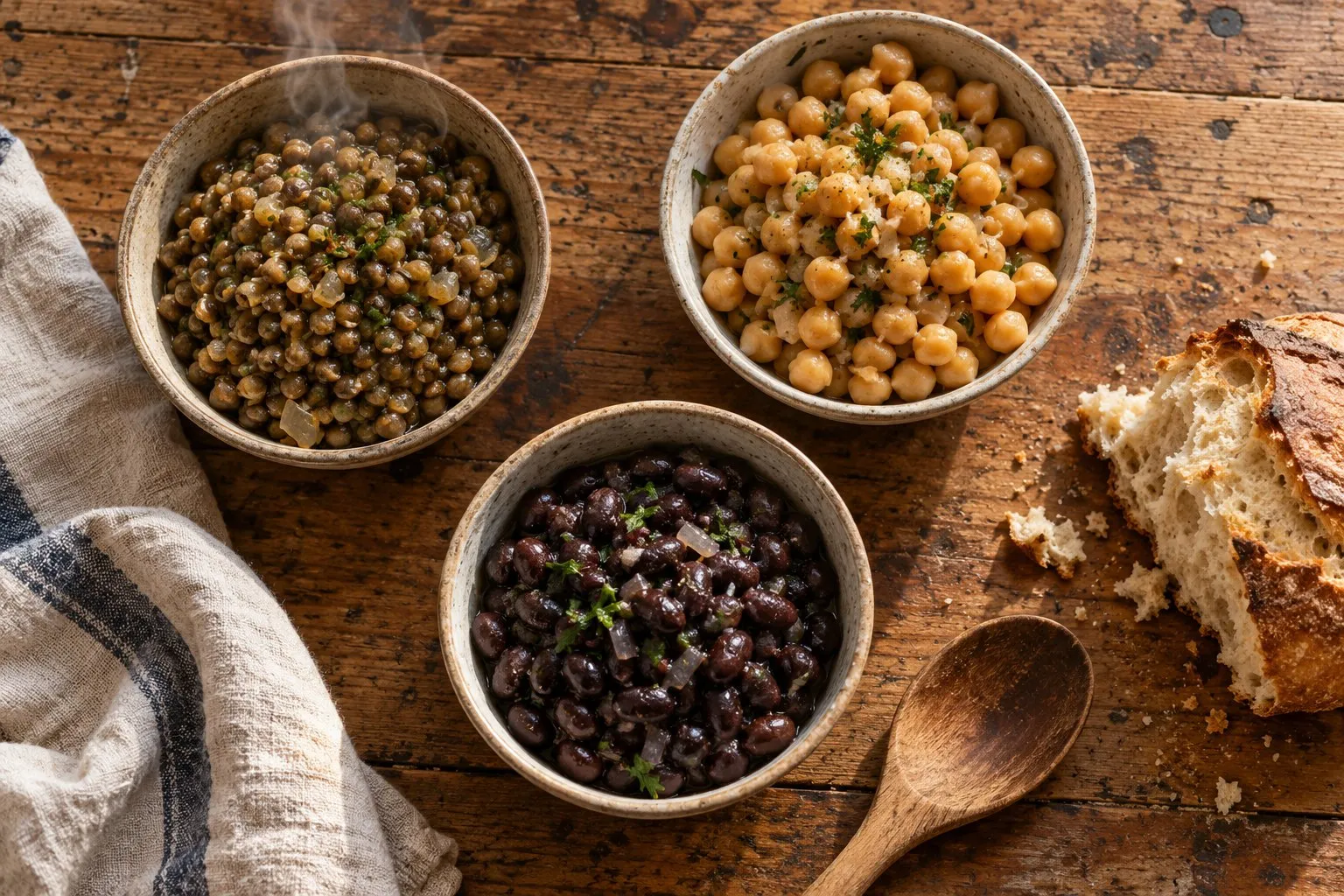
- Choose whole grains, beans and vegetables over white bread and sweet drinks.
- If you eat low-carb, fill the gap with nuts and olive oil rather than mostly with red meat.
- Keep an eye on added sugar; How much sugar a day is too much? sets out the limits.
Frequently asked questions
Are carbs at night bad? The studies here looked at total intake, not timing, so they can’t answer that. Cooling cooked rice or pasta before eating it is another small lever, covered in Does cooling pasta, rice and potatoes make them healthier?
Is keto healthy long term? The cohorts didn’t study keto diets specifically, but they linked very low-carb eating based on animal foods with a higher risk of death (Seidelmann et al., 2018). Anyone with diabetes or on medication should talk to their doctor before starting a very low-carb diet.
Are potatoes and white rice bad carbs? In the Harvard analysis, potatoes and refined grains were counted with the refined starches (Li et al., 2015). How you cook and combine them changes a lot, which is why they each get their own article.
Sources
- Dehghan, M., Mente, A., Zhang, X., Swaminathan, S., Li, W., Mohan, V., et al. (2017). Associations of fats and carbohydrate intake with cardiovascular disease and mortality in 18 countries from five continents (PURE): A prospective cohort study. The Lancet, 390(10107), 2050–2062. https://doi.org/10.1016/s0140-6736(17)32252-3
- Gardner, C. D., Trepanowski, J. F., Del Gobbo, L. C., Hauser, M. E., Rigdon, J., Ioannidis, J. P. A., et al. (2018). Effect of low-fat vs low-carbohydrate diet on 12-month weight loss in overweight adults and the association with genotype pattern or insulin secretion: The DIETFITS randomized clinical trial. JAMA, 319(7), 667–679. https://doi.org/10.1001/jama.2018.0245
- Li, Y., Hruby, A., Bernstein, A. M., Ley, S. H., Wang, D. D., Chiuve, S. E., et al. (2015). Saturated fats compared with unsaturated fats and sources of carbohydrates in relation to risk of coronary heart disease: A prospective cohort study. Journal of the American College of Cardiology, 66(14), 1538–1548. https://doi.org/10.1016/j.jacc.2015.07.055
- Seidelmann, S. B., Claggett, B., Cheng, S., Henglin, M., Shah, A., Steffen, L. M., et al. (2018). Dietary carbohydrate intake and mortality: A prospective cohort study and meta-analysis. The Lancet Public Health, 3(9), e419–e428. https://doi.org/10.1016/s2468-2667(18)30135-x