Is walking enough exercise?
A brisk walk meets the aerobic guideline and helps blood pressure, but muscle strength and bones need heavier work as well.

Katja Michel, M.Ed. · 5 min read
Does your week meet the guidelines? Take the one-minute test
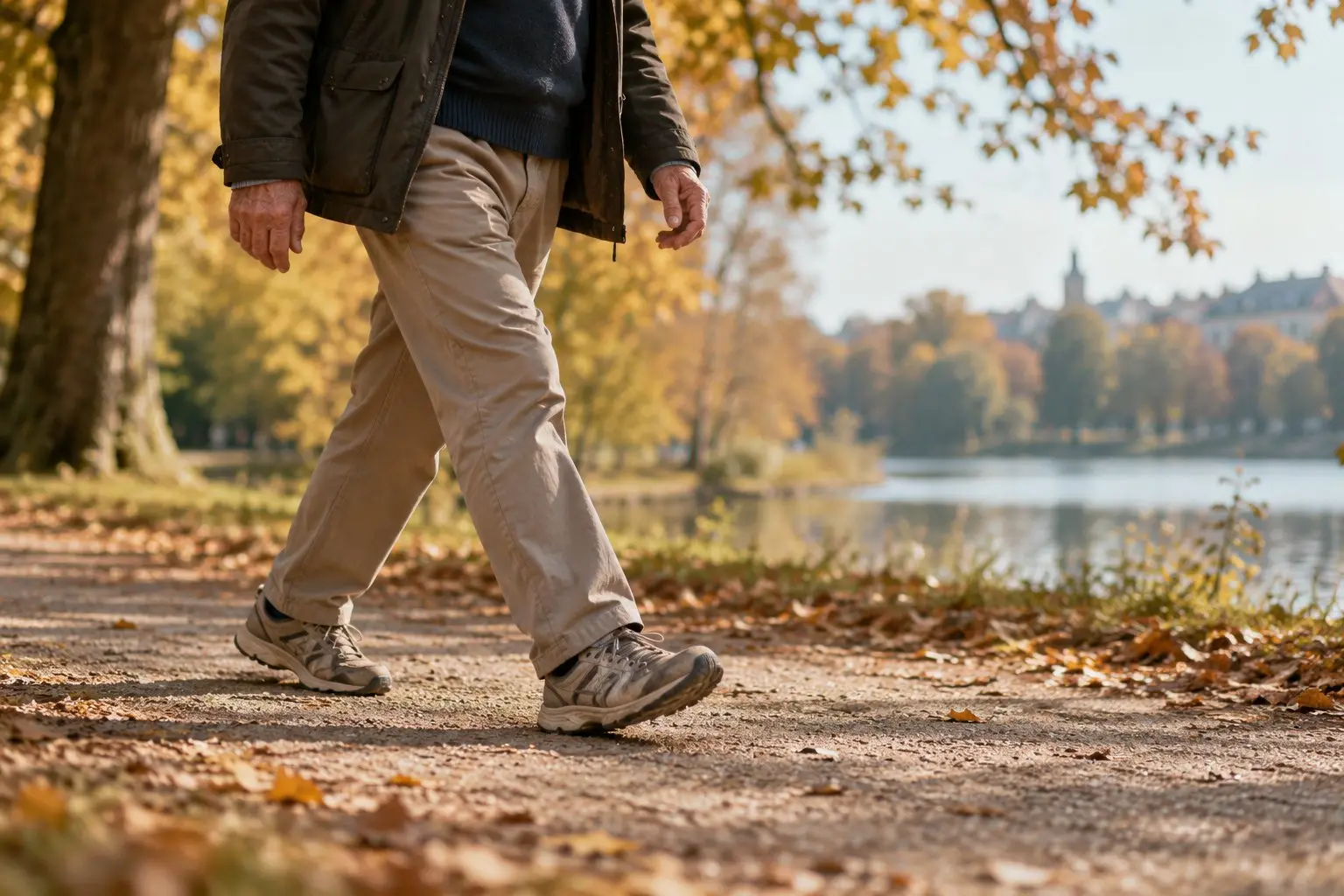
For your heart, your blood pressure and a longer life, a brisk daily walk does most of what the official guidelines ask for. It leaves out two things: muscle strength, which needs some form of resistance training, and the heavy loading that, in trials, helped bones. So walking is the best place to start, and for most adults it shouldn’t be the only thing they do.
Key takeaways
- Brisk walking counts as moderate exercise, and slow strolling mostly doesn’t.
- In trials with inactive adults, walking lowered blood pressure, waist size and weight.
- Walking at an average or brisk pace went with a lower risk of early death than walking slowly.
- On its own, walking barely changed bone density in women around and after menopause.
- Muscle strength and bone need some form of resistance training on top of walking.
Does walking count as exercise?
Walking counts for the aerobic half of the guidelines. The Physical Activity Guidelines for Americans ask adults for 150 to 300 minutes of moderate aerobic activity a week (Piercy et al., 2018), roughly 20 to 45 minutes a day, and the CDC lists walking briskly, at 2.5 miles per hour or faster, as moderate activity (CDC, n.d.). The same guidelines also ask for muscle-strengthening activities on two or more days a week, and that second half is where walking falls short.
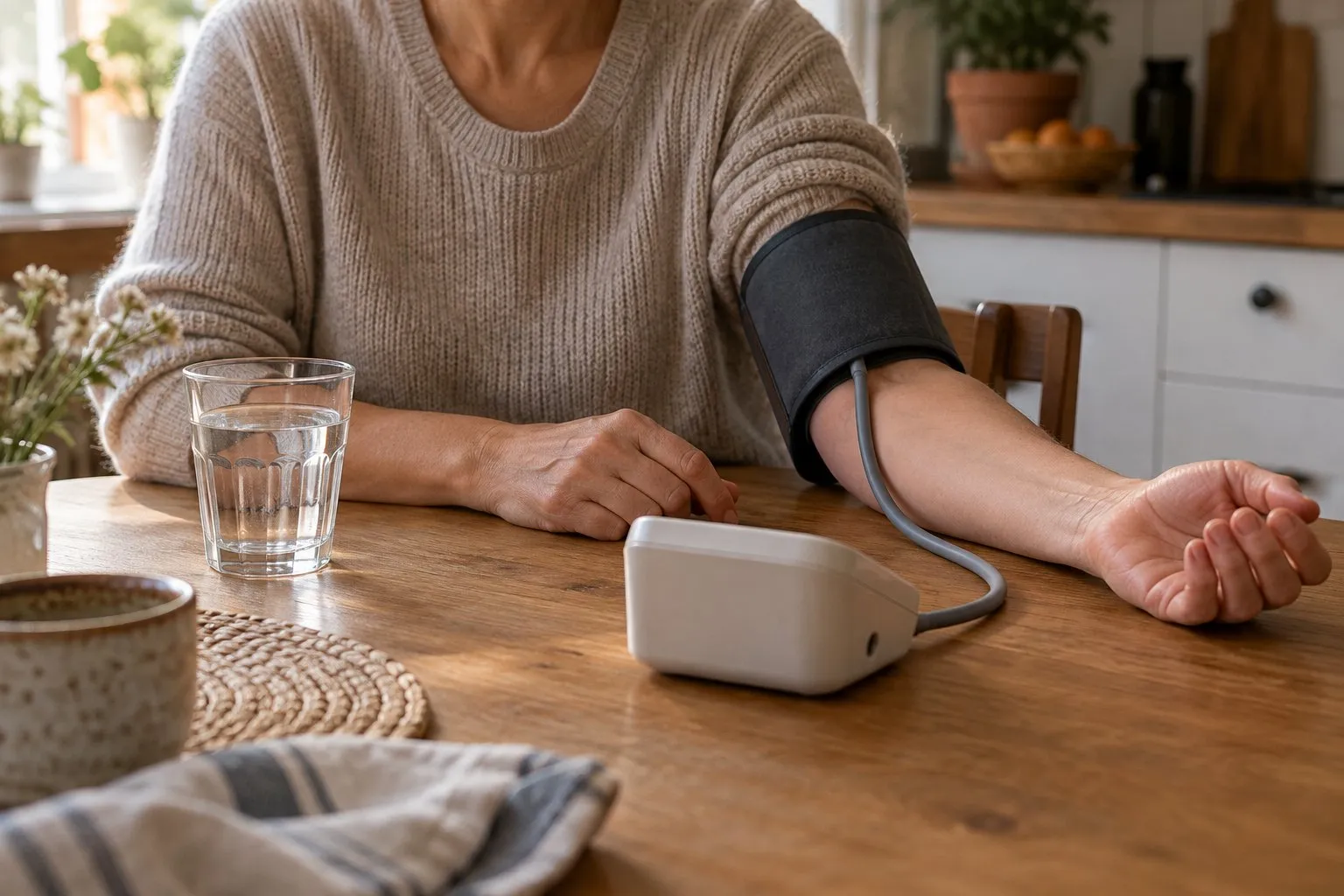
The aerobic half still does a lot, and a review of randomized trials reported in 32 papers shows how much: it compared inactive people who started a walking program of at least four weeks with people who didn’t exercise. The walkers became fitter and lowered their systolic blood pressure by about 3.6 mmHg, their waist by 1.5 centimeters and their weight by 1.4 kilograms. Their blood fats didn’t change (Murtagh et al., 2015). The blood pressure article covers the other habits that lower blood pressure. To me those look modest for one person and large for a whole population, for nothing more than putting on shoes.
The long-term studies point the same way. A review of 14 cohort studies with about 280,000 people who were healthy at the start found an 11 percent lower risk of dying during follow-up for a standard amount of walking, after accounting for people’s other exercise. The biggest benefit appeared in the groups that went from walking very little to walking some (Kelly et al., 2014).
How fast is a brisk walk?
About 100 steps a minute, at least in young adults. In a lab study with 76 adults aged 21 to 40, researchers measured how much energy people used at different walking speeds. Moderate intensity began at roughly 100 steps a minute and vigorous intensity at about 130 (Tudor-Locke et al., 2019). You can check your own pace by counting your steps for 15 seconds and multiplying by four, as a rule of thumb if you are older. The simpler check is the talk test: at moderate intensity you can talk but not sing (CDC, n.d.).
Whether pace matters beyond the minutes is less settled. British researchers pooled 11 population surveys with 50,225 walkers and asked them to rate their usual walking pace. Compared with slow walkers, people who said they walked at an average pace had a 20 percent lower risk of dying during follow-up, and brisk walkers a 24 percent lower risk, with wide margins of error. Pace showed no link with cancer deaths, and the links with overall death were seen in people over 50 and in those who did no vigorous exercise (Stamatakis et al., 2018). Pace was self-reported, and people who walk slowly may already be less healthy, so this shows a link, not proof that speeding up adds years. Studies that counted steps with a device found that much of the advantage of a faster pace shrank once they accounted for the total number of steps (Paluch et al., 2022; Lee et al., 2019). The steps-per-day article describes those studies.
What does walking leave out?
Walking leaves out strength, mostly. The guidelines list muscle-strengthening activities as a separate recommendation on top of the aerobic minutes, so walking doesn’t count toward it (Piercy et al., 2018). How little of it you need is explained in How much strength training do you need a week?
Is walking enough for strong bones?
For bones, walking alone showed little in trials, which surprised me because it is so often recommended for bone health. A review of ten trials in women around and after menopause found that walking alone made no significant difference to bone density in the spine, the forearm or the whole body. Only the hip showed a small gain, and only when the walking program lasted at least six months (Ma et al., 2013). For an activity with that reputation, it’s a thin result.
Heavier loading did better in one well-known trial. In the Australian LIFTMOR trial, 101 women past menopause with low bone mass did either 30 minutes of heavy, supervised lifting and jumping twice a week or a gentle home program, for eight months. Spine density rose by 2.9 percent in the lifting group and fell by 1.2 percent in the home group, and the lifters also did better in every test of everyday function. There was one adverse event, a minor back spasm (Watson et al., 2018). It was a single trial in women with low bone mass, and the training was closely supervised, so it is not something to start alone with heavy weights if your bone density is low.
Does walking train balance?
Balance training is a separate item in the guidelines: they ask older adults to add it as its own part of their week (Piercy et al., 2018).
What I’d do
- Walk most days at a pace where you can talk but not sing.
- Count your steps for 15 seconds now and then to check that you are near brisk.
- Add strength training on two days a week, with body weight, bands or weights.
- Put hills, stairs or a few faster minutes into your usual route, and choose green routes when you can. (Why: Does time in nature lower stress?)
- Ask your doctor before raising the intensity if you have heart disease, joint problems, osteoporosis or osteopenia.
Frequently asked questions
Can walking help you lose weight? A little. The weight change in the walking trials was small. Walking still helped blood pressure and fitness in those trials (Murtagh et al., 2015).
Is walking better than running? Running counts as vigorous activity (CDC, n.d.), and the guidelines treat 75 minutes of vigorous activity a week as equal to 150 minutes of moderate activity (Piercy et al., 2018). So running gets you there in about half the time, and walking may be the one you keep up for longer. If knees are the worry, Is running bad for your knees? looks at the arthritis data.
Is 30 minutes of walking a day enough? Five brisk 30-minute walks add up to 150 minutes, the lower end of the aerobic guideline (Piercy et al., 2018). Muscle-strengthening on two days a week comes on top.
Does walking after meals count? Yes, every minute counts toward your weekly total, and a short walk after eating also helps with blood sugar, as explained in Does a short walk after eating lower blood sugar?
Sources
- Centers for Disease Control and Prevention. (n.d.). Measuring physical activity intensity. https://www.cdc.gov/physical-activity-basics/measuring/index.html
- Kelly, P., Kahlmeier, S., Götschi, T., Orsini, N., Richards, J., Roberts, N., et al. (2014). Systematic review and meta-analysis of reduction in all-cause mortality from walking and cycling and shape of dose response relationship. International Journal of Behavioral Nutrition and Physical Activity, 11, 132. https://doi.org/10.1186/s12966-014-0132-x
- Lee, I.-M., Shiroma, E. J., Kamada, M., Bassett, D. R., Matthews, C. E., & Buring, J. E. (2019). Association of step volume and intensity with all-cause mortality in older women. JAMA Internal Medicine, 179(8), 1105–1112. https://doi.org/10.1001/jamainternmed.2019.0899
- Ma, D., Wu, L., & He, Z. (2013). Effects of walking on the preservation of bone mineral density in perimenopausal and postmenopausal women: A systematic review and meta-analysis. Menopause, 20(11), 1216–1226. https://doi.org/10.1097/gme.0000000000000100
- Murtagh, E. M., Nichols, L., Mohammed, M. A., Holder, R., Nevill, A. M., & Murphy, M. H. (2015). The effect of walking on risk factors for cardiovascular disease: An updated systematic review and meta-analysis of randomised control trials. Preventive Medicine, 72, 34–43. https://doi.org/10.1016/j.ypmed.2014.12.041
- Paluch, A. E., Bajpai, S., Bassett, D. R., Carnethon, M. R., Ekelund, U., Evenson, K. R., et al. (2022). Daily steps and all-cause mortality: A meta-analysis of 15 international cohorts. The Lancet Public Health, 7(3), e219–e228. https://doi.org/10.1016/s2468-2667(21)00302-9
- Piercy, K. L., Troiano, R. P., Ballard, R. M., Carlson, S. A., Fulton, J. E., Galuska, D. A., George, S. M., & Olson, R. D. (2018). The Physical Activity Guidelines for Americans. JAMA, 320(19), 2020–2028. https://doi.org/10.1001/jama.2018.14854
- Stamatakis, E., Kelly, P., Strain, T., Murtagh, E. M., Ding, D., & Murphy, M. H. (2018). Self-rated walking pace and all-cause, cardiovascular disease and cancer mortality: Individual participant pooled analysis of 50 225 walkers from 11 population British cohorts. British Journal of Sports Medicine, 52(12), 761–768. https://doi.org/10.1136/bjsports-2017-098677
- Tudor-Locke, C., Aguiar, E. J., Han, H., Ducharme, S. W., Schuna, J. M., Jr., Barreira, T. V., et al. (2019). Walking cadence (steps/min) and intensity in 21–40 year olds: CADENCE-adults. International Journal of Behavioral Nutrition and Physical Activity, 16(1), 8. https://doi.org/10.1186/s12966-019-0769-6
- Watson, S. L., Weeks, B. K., Weis, L. J., Harding, A. T., Horan, S. A., & Beck, B. R. (2018). High-intensity resistance and impact training improves bone mineral density and physical function in postmenopausal women with osteopenia and osteoporosis: The LIFTMOR randomized controlled trial. Journal of Bone and Mineral Research, 33(2), 211–220. https://doi.org/10.1002/jbmr.3284