Does white noise help you sleep?
Why one systematic review rated the evidence as very low quality while another found better sleep scores, and how loud a white noise machine should be.

Katja Michel, M.Ed. · 4 min read
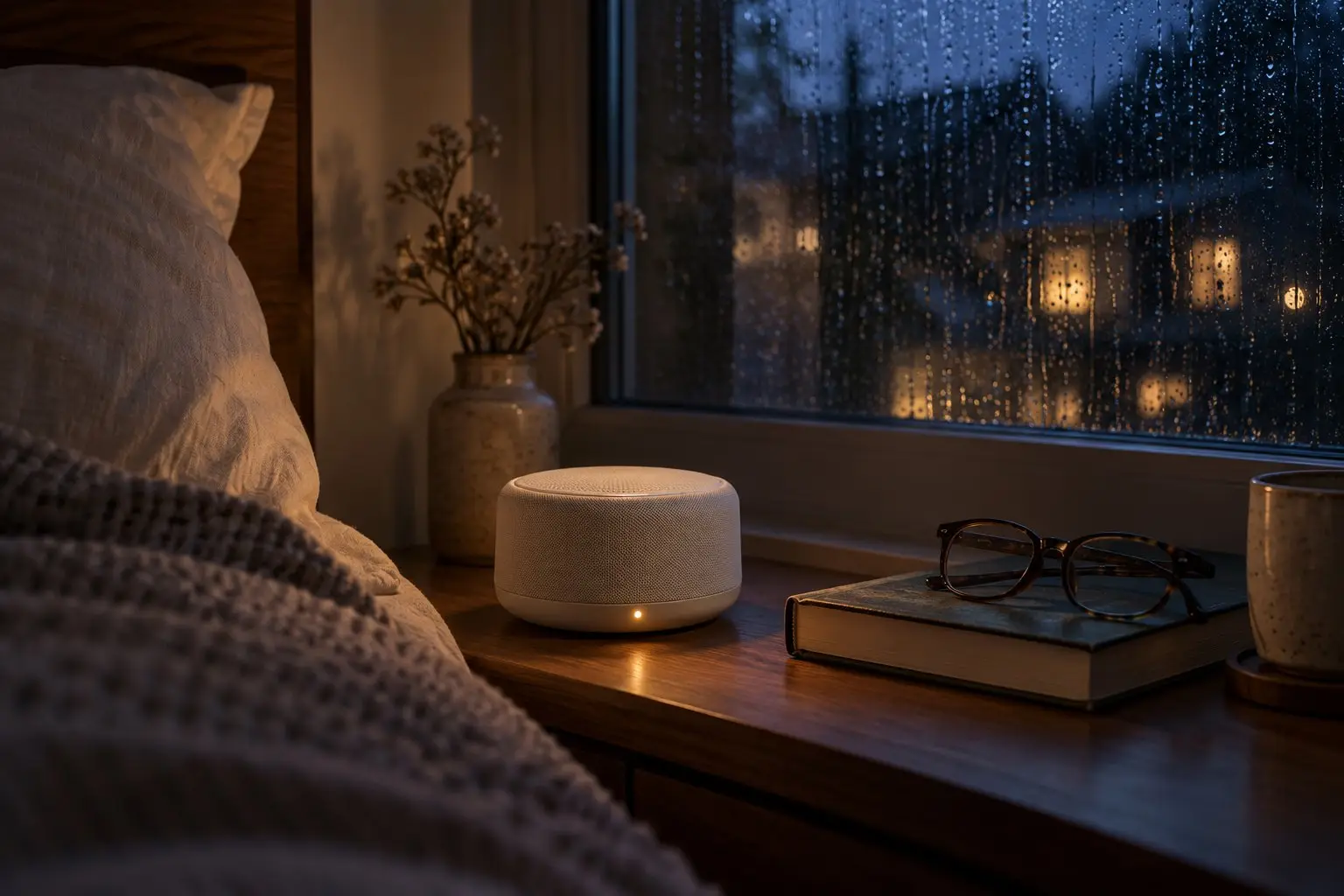
White noise may help some people sleep, especially in noisy places such as hospitals, but the evidence is weaker than its popularity suggests. One systematic review rated the overall quality as very low and found results ranging from better to worse sleep, while a newer meta-analysis, which included many patients in intensive care, reported better sleep quality scores. If you use it, keep the volume low, especially for babies.
Key takeaways
- White noise is meant to mask sudden sounds, such as traffic or a partner’s snoring, with a steady background sound.
- The older systematic review found that continuous noise sometimes improved and sometimes disrupted sleep.
- The newer meta-analysis found better sleep quality questionnaire scores in adults and older adults using white noise.
- Some white noise machines were loud enough at maximum volume to exceed workplace noise limits, which matters most for babies.
- Earplugs or simply reducing the noise source are alternatives worth trying.
What does the research on white noise show?
Mixed results of mostly low quality. A systematic review of 38 studies on continuous white or broadband noise and sleep found great variation in the type of noise, how sleep was measured and what it was compared with, and the findings ranged from improved to disrupted sleep. Using standard grading criteria, the authors rated the evidence that continuous noise improves sleep as very low quality, which contradicts its widespread use, and they warned that it may affect sleep and hearing negatively (Riedy et al., 2021).
A 2025 meta-analysis of 12 randomized trials with 1,301 participants was more positive. In adults and older adults, white noise lowered scores on the Pittsburgh Sleep Quality Index, a questionnaire on which lower is better, both inside and outside intensive care units. In babies and toddlers, it lengthened total sleep over 24 hours and reduced awakenings, but didn’t lengthen night sleep. The authors pointed out substantial differences between the studies and limited methodological quality (Ding et al., 2025). Many of the participants were critically ill hospital patients in intensive care, a very noisy setting that differs a great deal from a quiet bedroom at home, so the positive result may not carry over to an ordinary night. If a quiet bedroom still wakes you at night, Why do I wake up at 3 a.m.? covers the common causes.
Is white noise safe for babies?
White noise is safe for babies only at low volume. A scoping review found that white noise machines can exceed 91 decibels at maximum volume, which is above the US workplace noise guideline for a two-hour shift for adults. Animal studies pointed to harmful effects of continuous moderate-intensity noise on early development, while some human data suggested low-intensity noise may be beneficial during sleep. The authors support limits on the maximum volume and duration of commercial devices (De Jong et al., 2024). Place a machine well away from the crib and keep it quiet, and ask your pediatrician if you are unsure.
What I’d do
- Try white noise if a noisy environment wakes you, and judge it by how rested you feel after a few weeks.
- Keep the volume as low as works, and place the device away from your head.
- Try foam earplugs as an alternative, or tackle the noise source itself.
- Switch it off if it doesn’t help, since the evidence doesn’t require you to keep using it.
- Look at the other basics, such as the room temperature described in What is the best room temperature for sleep?
Frequently asked questions
Is pink or brown noise better than white noise? The 2021 review covered white and similar broadband noise and found the evidence very low quality overall (Riedy et al., 2021). I found no good trials showing that one color of noise beats another.
Is it bad to sleep with noise all night? The 2021 reviewers warned that continuous noise may also disturb sleep and affect hearing (Riedy et al., 2021). A timer or a low volume reduces the exposure.
Does white noise help with tinnitus at night? The studies discussed here didn’t look at tinnitus. Ask your doctor or an audiologist about sound therapy for tinnitus.
Sources
- De Jong, R. W., Davis, G. S., Chelf, C. J., Marinelli, J. P., Erbele, I. D., & Bowe, S. N. (2024). Continuous white noise exposure during sleep and childhood development: A scoping review. Sleep Medicine, 119, 88–94. https://doi.org/10.1016/j.sleep.2024.04.006
- Ding, Y., Sun, X., Yin, J., Wang, Z., Zhang, X., Zhang, D., Zhu, L., & Zhang, H. (2025). Impact of white noise on sleep quality across age groups and in critically ill/non-critically ill patients: A systematic review and meta-analysis of randomized controlled trials. Sleep Medicine, 136, 106869. https://doi.org/10.1016/j.sleep.2025.106869
- Riedy, S. M., Smith, M. G., Rocha, S., & Basner, M. (2021). Noise as a sleep aid: A systematic review. Sleep Medicine Reviews, 55, 101385. https://doi.org/10.1016/j.smrv.2020.101385