Is gardening good for your health?
A Colorado trial gave waiting-list adults a community plot at random, and a larger review looked at gardening and mood, wellbeing and health.

Katja Michel, M.Ed. · 4 min read
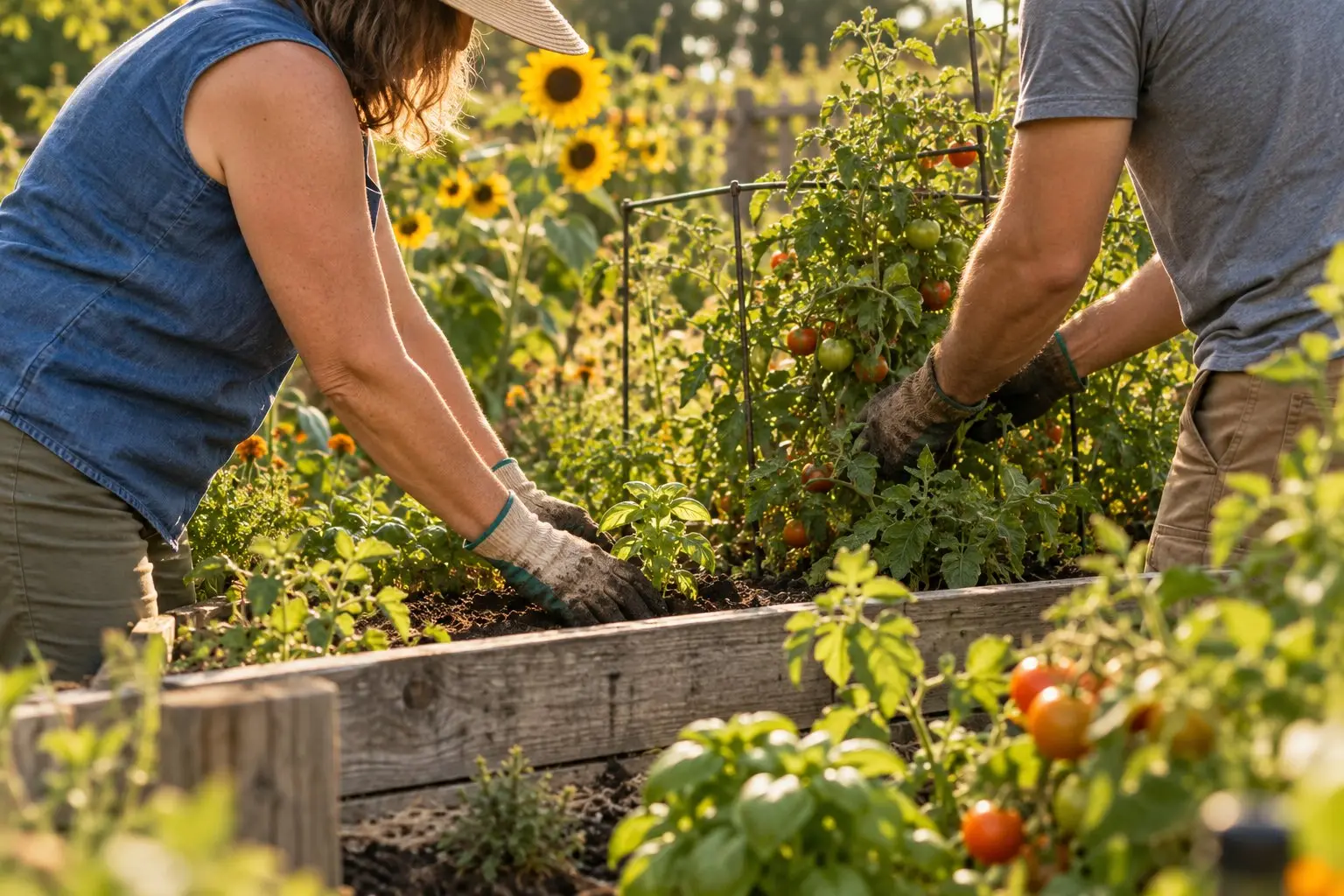
Yes, gardening seems to be good for body and mind, and a randomized trial supports it. When adults on a waiting list were randomly given a community garden plot, they ate a little more fiber, moved a little more and reported less stress and anxiety than those still waiting. Pooled studies of gardening point the same way, from lower anxiety to better life satisfaction, although most of those studies were not randomized.
Key takeaways
- In a randomized trial in Colorado, new community gardeners increased their fiber intake and their daily moderate-to-vigorous activity compared with people still on the waiting list.
- The gardeners also reported larger drops in perceived stress and anxiety during the growing season.
- Body weight, waist size and overall fruit and vegetable intake didn’t change measurably.
- A meta-analysis of 22 gardening studies found positive effects on outcomes ranging from depression and anxiety to life satisfaction and sense of community.
- Only one gardener in the trial reported an adverse event, an allergic reaction.
What did the community garden trial find?
Community gardening led to small but real improvements in diet, movement and stress. In the CAPS trial, 291 adults who were on waiting lists for community gardens in Denver and Aurora, Colorado, and hadn’t gardened in the previous two years were randomly assigned to receive a plot or to stay on the waiting list. Over the growing season, the gardeners increased their fiber intake and their moderate-to-vigorous physical activity compared with the control group, and they reported greater reductions in perceived stress and anxiety (Litt et al., 2023).
The effects were modest, about an extra gram and a half of fiber and about six more active minutes a day at the end of the season, and the stricter confidence intervals for those single time points included zero. There were no measurable changes in overall fruit and vegetable intake, diet quality score, sitting time, BMI or waist size. Most participants were women, and the trial was funded by public and nonprofit sources, including the American Cancer Society and the National Institutes of Health (Litt et al., 2023).
The extra fiber is worth having, since fiber matters for long-term health, as explained in How much fiber do you need a day?
What do other gardening studies show?
Most other gardening studies also found positive effects, though from weaker study designs. A meta-analysis of 22 studies comparing gardeners with non-gardeners, or people before and after taking up gardening, found a significant positive effect on health outcomes such as depression, anxiety, body mass index, life satisfaction, quality of life and sense of community. There were signs of publication bias, but the effect remained after statistical adjustment (Soga et al., 2017). Most of these studies weren’t randomized, so gardeners may simply differ from non-gardeners.
Gardening combines several things with their own evidence: being outdoors, covered in Does time in nature lower stress?, light physical activity and, in community gardens, other people.
What I’d do
- Grow something, even herbs on a balcony, if you have no garden.
- Join a community garden or allotment if you can, for the company as well as the vegetables.
- Count gardening as movement, and keep your strength training as well.
Frequently asked questions
Does gardening count as exercise? In the trial, gardeners got a few more minutes of moderate-to-vigorous activity a day than the control group (Litt et al., 2023). That counts toward the weekly guidelines in How much exercise do you need a week?
Is gardening good for older adults? The meta-analysis included studies across age groups and found positive effects overall (Soga et al., 2017). Adjust the work to your joints and strength, and use raised beds if bending is hard.
Does touching soil improve mood? The studies discussed here didn’t test soil contact as such, so I can’t answer from them.
Sources
- Litt, J. S., Alaimo, K., Harrall, K. K., Hamman, R. F., Hébert, J. R., Hurley, T. G., et al. (2023). Effects of a community gardening intervention on diet, physical activity, and anthropometry outcomes in the USA (CAPS): An observer-blind, randomised controlled trial. The Lancet Planetary Health, 7(1), e23–e32. https://doi.org/10.1016/s2542-5196(22)00303-5
- Soga, M., Gaston, K. J., & Yamaura, Y. (2017). Gardening is beneficial for health: A meta-analysis. Preventive Medicine Reports, 5, 92–99. https://doi.org/10.1016/j.pmedr.2016.11.007