How much protein do you need a day?
The minimum is 0.8 grams per kilogram, it rises after 65, and for muscle it levels off near 1.6. Here is what that looks like on a plate.

Katja Michel, M.Ed. · 5 min read
How much protein do you need? Take the one-minute test
Protein per day
How much protein you need depends on your age and your training more than on your sex.
Grams of protein per kilogram of body weight per day
Healthy adults need a minimum of a little less than one gram of protein per kilogram of body weight a day. Older adults need more, and people who lift weights to build muscle benefit up to roughly twice the minimum. Women and men need the same amount per kilogram; men usually need more grams only because they weigh more.
Key takeaways
- The minimum comes from nitrogen-balance studies and is set to cover almost everyone.
- Older muscles respond less to protein, so the recommended amount rises after 65.
- Extra protein added only a little muscle in trials, and only together with strength training.
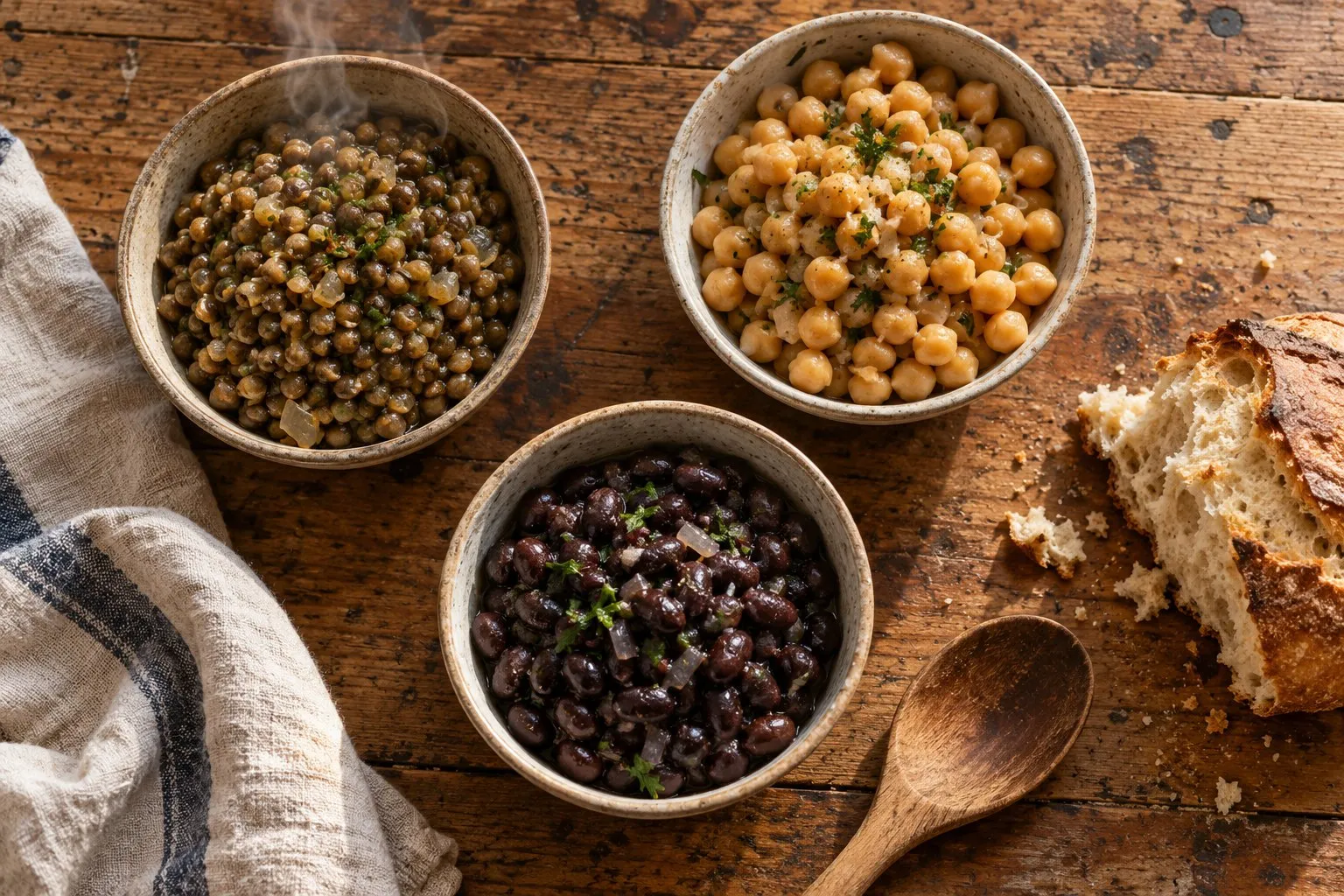
- Two eggs, a pot of Greek yogurt and a portion of lentils already cover more than half of a typical minimum.
- People with severe kidney disease may need less protein, not more, and should ask their doctor.
How much protein do you need per kilogram of body weight?
The daily minimum for healthy adults is about 0.8 grams per kilogram a day. It comes from a 2003 analysis of nitrogen-balance studies, the classic way to measure whether the body is losing or keeping protein, with 235 people in 19 studies. The average requirement was 0.65 grams per kilogram, and 0.83 grams covered 97.5 percent of healthy adults. The analysis found no clear difference by sex, age or protein source, with a hint that women might need slightly less (Rand et al., 2003).
That number is a floor. It tells you how much protein stops your body from running a deficit, and it says nothing about how much helps you build, repair or hold on to muscle as the years go by, which is the question most people are really asking when they type it into a search bar. For a 60-kilogram woman it means about 48 grams a day, for an 80-kilogram man about 64 grams.
Do older adults need more protein?
Yes, adults over 65 need more protein than younger adults. A European expert group on aging, PROT-AGE, recommends that people over 65 eat at least 1.0 to 1.2 grams per kilogram a day, because muscles respond less to protein with age. For older people who exercise, the group advises 1.2 grams or more, and for most older people with acute or chronic illness 1.2 to 1.5 grams. The exception is severe kidney disease without dialysis, where less protein may be needed (Bauer et al., 2013).
This is the part of the protein story I find most important, and it gets the least attention. Losing physical function in later life predicts falls, loss of independence and earlier death, as the PROT-AGE group points out (Bauer et al., 2013). Protein shakes seem to be marketed mainly to young men in gyms, while the people who most need more protein are often their grandparents.
How much protein do you need to build muscle?
Building muscle takes more protein than the minimum, but less than gym culture suggests. A review of 49 randomized trials with 1,863 people looked at protein supplements during at least six weeks of strength training. The extra protein added a little more strength and muscle, about 0.3 kilograms of lean mass on average. The gains stopped increasing at a total protein intake of about 1.6 grams per kilogram a day, and the benefit was smaller in older participants (Morton et al., 2018).
Without training, extra protein builds no muscle. The lifting is what drives the change; protein supports it, and the strength training article covers how much lifting a week is enough.
What does enough protein look like on a plate?
Enough protein looks less dramatic than the labels on protein bars suggest, because ordinary foods add up quickly.
Protein in everyday foods
| Food | Portion | Protein |
|---|---|---|
| Eggs | 2 | 13 g |
| Greek yogurt | small pot (170 g) | 16 g |
| Lentils, cooked | 200 g | 18 g |
| Firm tofu | 150 g | 26 g |
| Cottage cheese | 225 g | 24 g |
| Chicken breast, cooked | 120 g | 37 g |
Values from USDA FoodData Central (USDA, 2019), rounded.
Spread over three meals, two eggs at breakfast, a lentil dish at lunch and a portion of tofu or chicken at dinner bring most adults well past their minimum. If you want a personal number for your weight, age and goal, use the protein calculator.
What I’d do
- Work out your minimum: body weight in kilograms times 0.8, or times 1.0 to 1.2 if you are over 65.
- Put a protein food in every meal instead of loading it all into dinner.
- Aim for about 1.6 grams per kilogram if you are doing strength training to build muscle, and not much beyond that.
- Choose beans, lentils, tofu, fish, eggs and dairy more often than processed meat, for the reasons in the red meat article. Whether dairy itself is worth it is covered in Is milk good for you?
- Ask your doctor before raising protein if you have kidney disease.
Frequently asked questions
How much protein does a woman need a day? The same per kilogram as a man: about 0.8 grams, which comes to roughly 48 grams for a 60-kilogram woman. The 2003 analysis found no clear difference by sex, with a hint that women might need slightly less (Rand et al., 2003).
Is too much protein bad for your kidneys? For people with severe kidney disease, high protein can be a problem, which is why the PROT-AGE group makes an exception for them (Bauer et al., 2013). For people with healthy kidneys, the group sets no such limit. The trials and cohorts behind that are laid out in Does protein damage your kidneys?
Do I need protein powder to reach my daily protein? Usually not. Food covers the amounts above easily for most people. A powder can be convenient after training or for older people with a small appetite. Creatine, the other popular gym supplement, gets its own look in the creatine article.
Is plant protein as good as animal protein? For the minimum, the nitrogen-balance analysis found no clear difference by protein source (Rand et al., 2003). Combining different plant foods across the day covers your needs.
Sources
- Bauer, J., Biolo, G., Cederholm, T., Cesari, M., Cruz-Jentoft, A. J., Morley, J. E., et al. (2013). Evidence-based recommendations for optimal dietary protein intake in older people: A position paper from the PROT-AGE Study Group. Journal of the American Medical Directors Association, 14(8), 542–559. https://doi.org/10.1016/j.jamda.2013.05.021
- Morton, R. W., Murphy, K. T., McKellar, S. R., Schoenfeld, B. J., Henselmans, M., Helms, E., et al. (2018). A systematic review, meta-analysis and meta-regression of the effect of protein supplementation on resistance training-induced gains in muscle mass and strength in healthy adults. British Journal of Sports Medicine, 52(6), 376–384. https://doi.org/10.1136/bjsports-2017-097608
- Rand, W. M., Pellett, P. L., & Young, V. R. (2003). Meta-analysis of nitrogen balance studies for estimating protein requirements in healthy adults. The American Journal of Clinical Nutrition, 77(1), 109–127. https://doi.org/10.1093/ajcn/77.1.109
- US Department of Agriculture, Agricultural Research Service. (2019). FoodData Central (SR Legacy: egg 171287, Greek yogurt 171312, chicken breast 171477, lentils 172421, firm tofu 172475, cottage cheese 172182). https://fdc.nal.usda.gov/